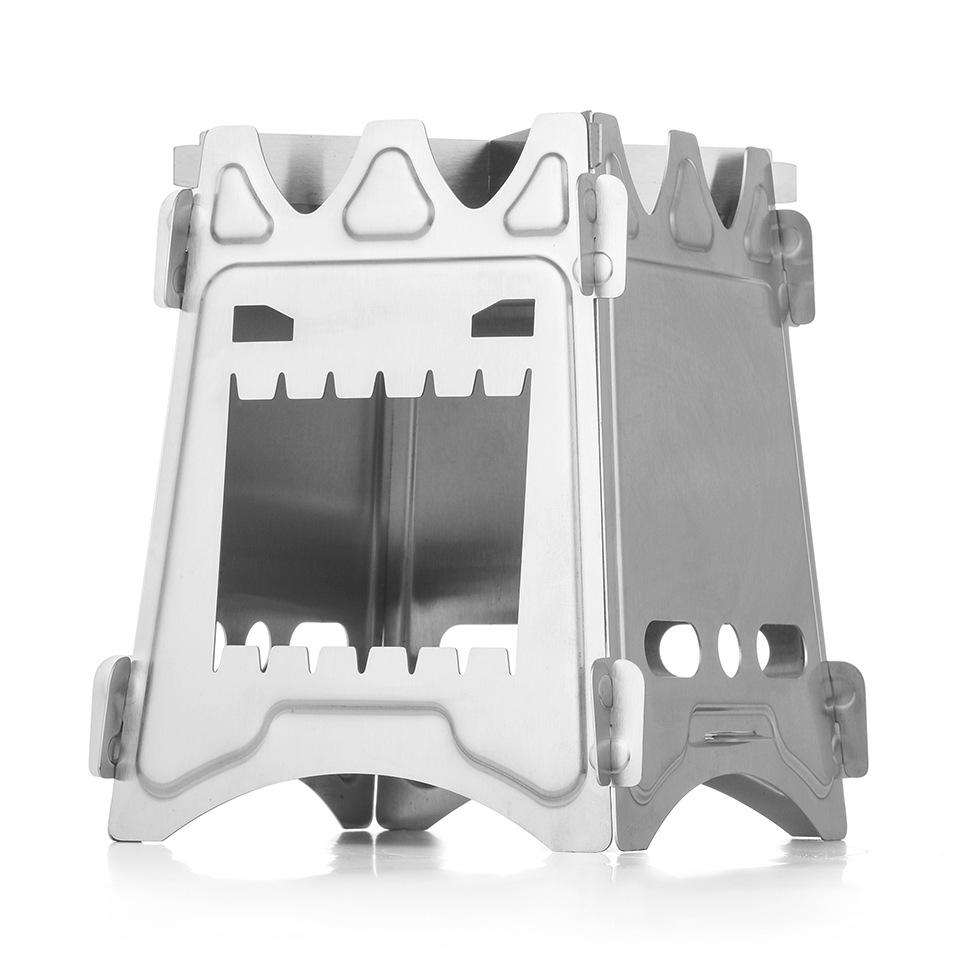
Cook With Whatever’s on the Ground
Most camping stoves need manufactured fuel — propane canisters, butane cartridges, white gas. Run out and you’re eating cold food. The Forge Rocket Stove runs on whatever combustible biomass you can find: twigs, branches, pine cones, wood chips, dried leaves, even cardboard. If it burns, the Forge cooks with it.
The design is a rocket stove — a combustion chamber with an insulated vertical chimney that creates a powerful upward draft. Small-diameter fuel feeds in from the side, combustion air enters from below, and the focused flame exits the top directly under your pot. The result: 16,000 BTU from fuel you picked up off the forest floor.
This is the cooking stove for people who want fuel independence. Backcountry camping where canister resupply isn’t an option. Emergency preparedness kits where shelf life matters (wood doesn’t expire). Overlanding trips where you’d rather carry an extra water jug than a propane tank.
From sticks and twigs
Burns found wood
1 liter of water
Carbon steel build
How a Rocket Stove Works
The rocket stove isn’t new — it was developed in the 1980s for efficient cooking in fuel-scarce regions. The principle is simple physics:
- Fuel shelf. Small-diameter wood (1″–2″ sticks) feeds horizontally into the combustion chamber. Gravity pulls fuel toward the burn zone as it’s consumed — you don’t need to push it in.
- Insulated combustion chamber. The chamber retains heat, raising the temperature high enough for secondary combustion — burning the smoke itself. This extracts more energy from less fuel.
- Vertical chimney. Hot air rises through the insulated chimney, creating a powerful draft that pulls air into the fuel chamber. More air = more complete combustion = hotter, cleaner flame.
- Focused flame exit. The flame exits the top of the chimney directly under your cookware. No heat wasted to the sides — it all goes into the pot.
The result is a stove that produces as much cooking heat as a propane burner from finger-sized sticks. The Forge’s 16,000 BTU output boils 1 liter of water in about 4 minutes — competitive with canister stoves costing twice as much.
When to Choose a Rocket Stove Over a Tent Stove
The Blaze Tent Stove and Feather Titanium are designed to heat shelters. They have chimneys, cooktops, and dampers for sustained low burns. The Forge is designed for one thing: cooking. It’s an outdoor-only stove with a focused flame meant to boil water and cook meals, not heat a tent.
- Choose the Forge when cooking is the goal and you don’t want to carry fuel.
- Choose the Blaze/Feather when shelter heating is the goal (with cooking as a secondary benefit).
What You Can Cook
- Boiling water — Tea, coffee, rehydrating freeze-dried meals, purifying water. The Forge’s fastest application.
- One-pot meals — Stews, soups, chili, pasta. The focused flame heats evenly when you rotate the pot periodically.
- Frying — Eggs, bacon, pancakes in a cast iron skillet. Use the Forge with the Cast Iron Cookware Set‘s skillet for field-quality breakfast.
- Grilling — Small cuts over the open flame. Rest a flat grate across the top for direct-heat grilling.
Specifications
| Combustion Chamber | 4″ diameter × 10″ chimney height |
| Fuel Opening | 4″ × 4″ side feed |
| Material | 14-gauge carbon steel with ceramic fiber insulation |
| Weight | 12 lbs (5.4 kg) |
| Dimensions | 8″ × 8″ × 14″ (W × D × H) |
| Heat Output | ~16,000 BTU (varies with fuel) |
| Fuel Type | Twigs, branches, wood scraps, pine cones, biomass |
| Boil Time | ~4 minutes (1 liter) |
| Pot Support | Integrated 3-prong rest, fits 4″–10″ cookware |
| Included | Stove body, fuel tray, carry bag |
Operation Tips
Pro Tip: Keep a pile of dry, pencil-diameter sticks within arm’s reach. The Forge burns through small fuel quickly — you’ll feed it every 3–5 minutes during active cooking. Pre-break your sticks to 8″–10″ lengths so they slide smoothly into the fuel chamber. Wet or green wood kills rocket stove efficiency — if your fuel hisses when it burns, it’s too wet.
- Start with tinder. Crumpled paper, dry bark, or a fire starter in the combustion chamber. Light it and add pencil-diameter sticks once it catches.
- Feed continuously. The rocket stove works best at a steady burn — not big surges. Push fuel in as it’s consumed.
- Adjust heat with fuel. More sticks = more heat. Fewer sticks = lower heat. You control temperature by controlling fuel input, not with a knob.
- Let it burn down before packing. The carbon steel retains heat for 20–30 minutes after the last fuel is consumed.
Frequently Asked Questions
Is 12 lbs too heavy for backpacking?
For backpacking, yes — ultralight hikers use canister stoves under 1 lb. The Forge is designed for car camping, overlanding, base camps, and emergency prep where it rides in a vehicle. For backpackable wood-burning heat, see the Feather Titanium.
Can it burn charcoal or pellets?
Charcoal works but isn’t ideal — charcoal doesn’t feed well in the horizontal fuel chamber and burns slower than the rocket stove design expects. Wood pellets work well if you pour them into the combustion chamber from the top, but they burn fast. Natural wood sticks are the intended fuel and give the best performance.
Is this good for emergency preparedness?
Excellent. Unlike propane or butane, the Forge’s fuel doesn’t expire, can’t leak, and is available everywhere (fallen branches, lumber scraps). In a power outage or natural disaster scenario, it provides cooking capability indefinitely. Pair it with a cast iron pot for boiling water to purify it.
How does it compare to a Solo Stove Campfire?
Different tools for different jobs. The Solo Stove Campfire is a smokeless fire pit for ambiance and warmth. The Forge is a focused cooking stove. The Forge puts all its heat into one concentrated point under your pot; the Solo Stove spreads heat outward for warming people. If you want to cook, use the Forge. If you want a campfire, see our Ember series.

Reviews
There are no reviews yet.